
Counseling Services
Embarking on a university journey means going through an intense phase of change, growth, and self-redefinition. It is a time rich in opportunities, but also in challenges. The university psychological counseling service was created to offer a safe, welcoming, and professional space to pause, listen to oneself, and take the first step toward one’s own psychophysical well-being.
What counseling is
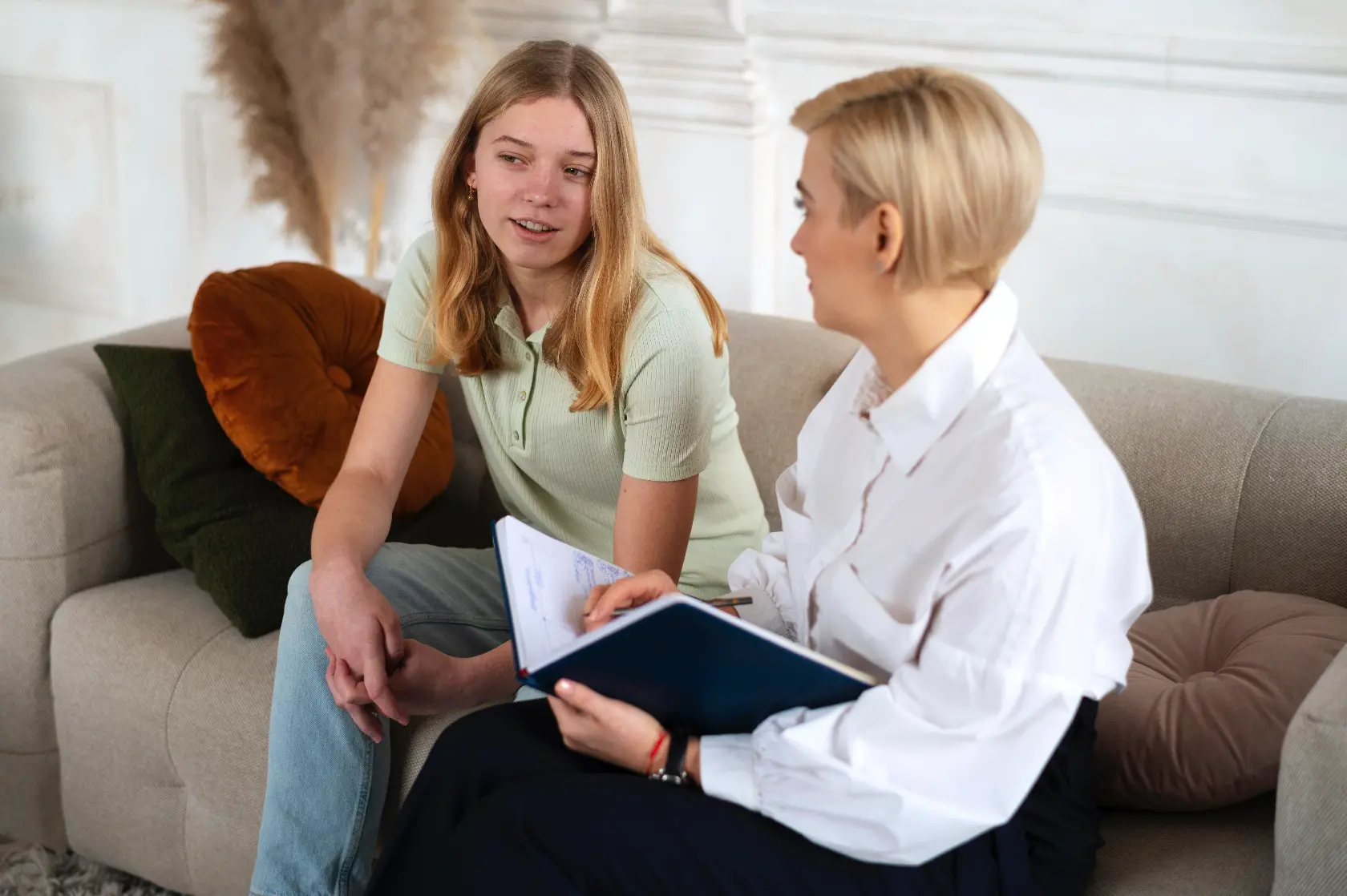
University psychological CounselingA short-term process with a specialist designed to help you better understand yourself and navigate difficult times. is a brief and targeted support intervention designed to offer emotional and psychological help to students going through periods of difficulty, related both to their academic path and their personal lives.
It serves as a welcoming space for listening, where students can address issues such as anxiety, insecurity, a sense of directionlessness, dissatisfaction, or tension in relationships and academic life.
The main objective is to support students in activating their internal resources, improving well-being, and fostering personal growth during their university years. If necessary, this journey can also serve as a first step toward a more in-depth and continuous psychological intervention.
CounselingA short-term process with a specialist designed to help you better understand yourself and navigate difficult times. is based on a professional and structured relationship, designed to help the individual develop greater self-awareness, accept and understand their emotional difficulties, and promote their personal development.
Objectives can vary widely: from overcoming academic obstacles or barriers to personal growth, to managing moments of crisis, to seeking a deeper understanding of oneself through reflection and InsightWhen you gain a deeper understanding of something important about yourself by connecting it to your emotions, past experiences, or relationships. This awareness helps you change the way you live.. Within this framework, the psychologist’s role is to accompany and facilitate the student’s psychological work, while respecting their values, personal resources, and autonomy.
Unlike psychotherapy, CounselingA short-term process with a specialist designed to help you better understand yourself and navigate difficult times. does not have a structured clinical treatment or the resolution of specific symptoms as its primary goal. Instead, it is configured as a space for guidance and clarification, which can also have a secondary therapeutic benefit. In some cases, it can represent a first step toward a potential, more in-depth psychological path.
Who the counselor is
The psychological counselor is a qualified professional with specific training in the psychological field, operating within a structured and support-oriented relationship.
Their role is to accompany the student on a journey of clarification and awareness, facilitating the emergence of personal resources and supporting autonomous decision-making. They do not offer ready-made solutions, but rather promote a space for active reflection that respects the individual’s values, history, and uniqueness.
Within this service, the role of counselor is held by psychologists and psychotherapists. These are professionals with a solid theoretical and clinical background, gained in academic and field settings, capable of welcoming and supporting individuals during times of difficulty, distress, or change.
The psychodynamic approach is based on paying attention to the unconscious aspects that influence how each person experiences and relates to themselves and others.
In a CounselingA short-term process with a specialist designed to help you better understand yourself and navigate difficult times. session, this translates into deep and empathetic listening, aimed at fostering awareness of emotional and relational dynamics that often operate outside of rational control, but can condition thoughts, behaviors, and choices.
The professionals work in an atmosphere of respect, confidentiality, and non-judgment, building together with the individual a space for reflection and understanding, helpful for activating personal resources and new ways of facing difficulties.
Who can access the service and who it is for
CounselingA short-term process with a specialist designed to help you better understand yourself and navigate difficult times. is for anyone who:
- experiences moments of stress or anxiety related to exams or study workload;
- goes through phases of indecision or blocks in their academic journey;
- encounters relationship difficulties or a sense of isolation;
- wishes to better understand themselves and their emotional dynamics;
- wants to strengthen their personal resources and ResilienceThe ability to bounce back after difficult times..
You do not need to be in a “severe” situation to ask for help.
Often, psychophysical well-being comes precisely from the conscious choice to pause and dedicate a space for listening to yourself.
The service is offered free of charge to students regularly enrolled in the Universities and AFAM Institutions participating in the WAVE project. Access to the service is simple, free, and confidential.
The journey includes a defined number of sessions, respecting the individual’s time and goals.
Individual Counseling
The individual psychological counseling journey begins with an initial introductory session, which aims to offer a time and space to explain your situation, understand your difficulties, and evaluate the start of a targeted CounselingA short-term process with a specialist designed to help you better understand yourself and navigate difficult times. path.
At the end of this first consultation, weekly sessions are established with the goal of supporting the student in expanding their self-knowledge, clarifying the difficulties experienced in the challenging situation, and understanding how to cope with it in the best possible way.
Group Counseling
Group counseling not only allows the service to reach a wider range of users, but also diversifies the responses to different requests. In addition to traditional clinical groups, specialized paths can be structured around specific needs that are not necessarily linked to an established psychological distress: ranging from academic and social integration difficulties to the enhancement of personal resources (such as developing assertiveness and emotional regulation).
Finally, the group setting is highly effective for intervening in transdiagnostic risk factors, such as reducing dysfunctional perfectionism or improving sleep quality.
How the journey works
The service is managed by a team of professional psychologists and psychotherapists and is structured as a cycle of individual psychological counseling. The framework of the journey includes free individual sessions to explore the issue, support your psychophysical well-being, and identify management strategies. Depending on the university or institute you are enrolled in, Follow-upMonitoring sessions after the journey, to see how you are doing and whether further support is needed. meetings may also be provided.
How Sessions are Conducted
We firmly believe that human connection is the foundation of any effective support. For this reason, sessions take place primarily in person: this ensures a safe, protected, and judgment-free space where privacy is fully guaranteed and authentic dialogue can happen. The online mode is strictly reserved for students who are currently abroad through international mobility programs (such as Erasmus).
Sport and Well-being

The WAVE 3.0 project stems from the conviction that sport is not only a driver of health, but also a powerful engine for inclusion and social-emotional development.
Thanks to the network of university sports facilities – SapienzaSport, Foro Italico, CUS Viterbo, and LUMSA – the project aims to expand, enhance, and innovate the activities available to the student population.
Building on previous projects that promoted sport as a lever for health and university inclusion, the Partnership offers a series of activities aimed at students of Universities and AFAM Academies. The goal is to strengthen psychophysical well-being, cognitive functions, and emotional resilience through an integrated approach that combines movement, immersive technologies, and applied psychology.
Active Breaks: Small Gestures, Big Changes
The project includes a comprehensive observation and analysis of the effects of physical activity and active breaks on the psychophysical well-being of participants. Active breaks are short interruptions of the main activity (work, study, etc.) during which light physical exercises or relaxation activities are performed, with the aim of countering sedentary behavior, improving concentration, and reducing stress, focusing specifically on three key areas:
- Motor functions
- Postural balance
- Cognitive functions
The benefits of active breaks are multiple: improved blood circulation, reduced stress and fatigue, enhanced concentration and creativity, and the prevention of muscle pain and postural problems related to a sedentary lifestyle.
The activity is structured as a longitudinal study, which allows for the long-term monitoring of changes associated with the regular introduction of short movement sessions, mobility exercises, and motor activation strategies adapted to daily life and work environments.
Wearable technologies and non-invasive sensors are used for data collection. These include inertial measurement units (IMUs) applied to the trunk and limbs to evaluate motor patterns, stabilometric force platforms to measure static and dynamic balance, and devices to monitor heart rate and heart rate variability (HRV), aiming to obtain integrated indicators of physical state and stress.
Cognitive functions are analyzed through standardized computerized tests, supported by digital tools to measure reaction times, sustained attention, and working memory.
These activities will enable the collection of both objective and subjective data on the impact of active breaks and physical activity on parameters relevant to health and quality of life. This will contribute to defining sustainable models for health and well-being promotion within communities and organizational contexts.
Technological Innovation and Experimental Protocols
Building on the activities of WAVE 1 and WAVE 2, two experimental protocols are introduced: CMDT-VR (Cognitive-Motor Dual-Task Virtual Reality) and CMDT with Resource Tapping. These protocols combine cognitive and motor exercises with virtual reality tools and emotional regulation techniques.
Furthermore, the introduction of physiological sensors makes it possible to:
- Provide real-time feedback to students during exercise;
- Develop greater body awareness;
- Enhance self-regulation skills to combat academic stress and BurnoutA state of physical and mental exhaustion, often caused by excessive studying, responsibilities, or stress..
A new project is also being introduced, aimed at evaluating the effects of cognitive-motor training on psychophysical well-being, brain function, and cognitive performance through the use of neurostimulators during physical activity.
Active Participation and Community
A fundamental pillar of the project is strengthening active student participation to create inclusive, non-judgmental environments centered on peer-to-peer exchange.
The project includes the training of student tutors who, with the support of psychologists and educationalists, will lead discussion groups (thematic meetings open to the student community) on:
- stress management;
- emotional regulation;
- healthy lifestyles (nutrition, sleep, physical activity, etc.);
- experiential workshops (body-based workshops to stimulate experiential learning and promote psychophysical well-being through mind-body integration).
WAVE 3.0 is configured not only as a preventive intervention, but as an innovative proposal to promote health, self-regulated learning, and active participation. It represents a new paradigm of academic well-being: accessible, evidence-based, and person-centered.
During the initiatives, sports psychologists and psychological counseling experts accompany participants, ensuring the maximization of the activities’ effectiveness.
Furthermore, WAVE offers numerous sports events for students. Sapienza University of Rome, for example, presents the sixth edition of “PADEL E SALUTE” (Padel and Health), the “Sapienza” free prevention event in the capital.